Pular para o conteúdo

CASES

Sector Project Design

The challenge

International expansion is a critical pathway for industries with strong potential, but fragmented efforts rarely deliver sustainable results. What was needed was not just isolated actions, but a Sector Project — a collective strategy to strengthen competitiveness abroad, define priority markets, and support companies at different levels of export maturity.


Our approach

A project of this scale cannot rely on assumptions. It requires data, methodology, and alignment. To structure it, we designed a process that combined:

  • Rigorous analysis — in-depth sector studies, field research, and examination of global trade data.
  • Market intelligence — a multi-criteria ranking methodology applied to 168 countries, crossing import/export data, growth rates, and company perspectives.
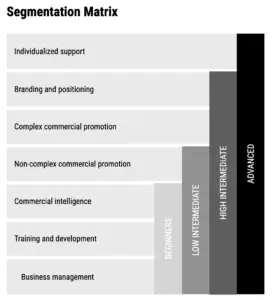
  • Company segmentation — mapping firms according to their export maturity (beginners to advanced) to ensure tailored pathways.
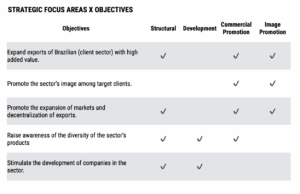
  • Strategic focus — organizing the project around four pillars: Image Promotion, Commercial Promotion, Development, and Structural support.
  • Goal setting and sustainability — defining realistic, measurable targets, aligned with institutional requirements, while creating the conditions for long-term viability.


The methodology

Our methodology integrated both market foresight and organizational strategy.

Our methodology combined quantitative rigor with stakeholder engagement.
  • Market prioritization: A two-phase selection matrix considered market size (import volumes, Brazilian exports) and market dynamism (growth from 2016–2019), narrowing 168 countries to 42. This was validated with companies, who added insights on demand drivers, sector trends, and competitor presence.
  • Strategic alignment: Objectives — such as increasing high-value exports, diversifying markets, and promoting the sector’s image — were directly linked to the four strategic focus areas, creating a clear logic between goals and actions.

  • Segmentation: Companies were not treated as a homogeneous group. Beginners accessed training and basic intelligence, while advanced exporters received individualized support and complex promotion tools. This ensured relevance at every stage of maturity.

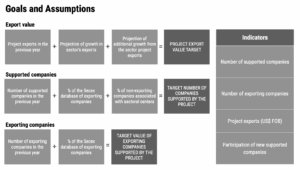
  • Foundations for measurement: Clear assumptions and parameters defined export targets, company participation, and performance indicators, creating transparency and accountability for results.


The delivery

The outcome was a complete Sector Project: a detailed budget, an action plan for international promotion, and a sustainability model to ensure continuity. The project was submitted, approved, and funded for two years (with renewal cycles), and we accompanied it through institutional review processes to guarantee alignment and fine-tune execution.


The impact

This work became a shared roadmap for internationalization, giving companies clarity on markets, readiness, and opportunities. For the sector, it built coherence, strengthened competitiveness, and enabled consistent positioning in global markets.

Related Posts