Pular para o conteúdo

CASES

Code of Culture

The challenge

When a fast-growing tech company needed to define its organizational culture, the stakes were high. After mergers and rapid expansion, leaders sought a clear and authentic Code of Culture — one that could unify new teams, sustain growth, and guide decisions for the future.
Our approach

Culture cannot be captured in a template or a single workshop. It emerges from the subtleties of daily life, and to truly understand it, you need methods that go beneath the surface. Partnering with In-Versa, we designed a process that combined:

  • Rigorous analysis — interviews, employee narratives, surveys, benchmarking, and multiple cultural frameworks (Schein, HBR, Laloux, Spencer Stuart, leadership paradigms).
  • Integration of perspectives — crossing qualitative insights with developmental models to expose tensions between collaboration, performance, and purpose.
  • Stakeholder connection — engaging C-level leaders and frontline employees alike, ensuring the culture reflected many voices.

The methodology

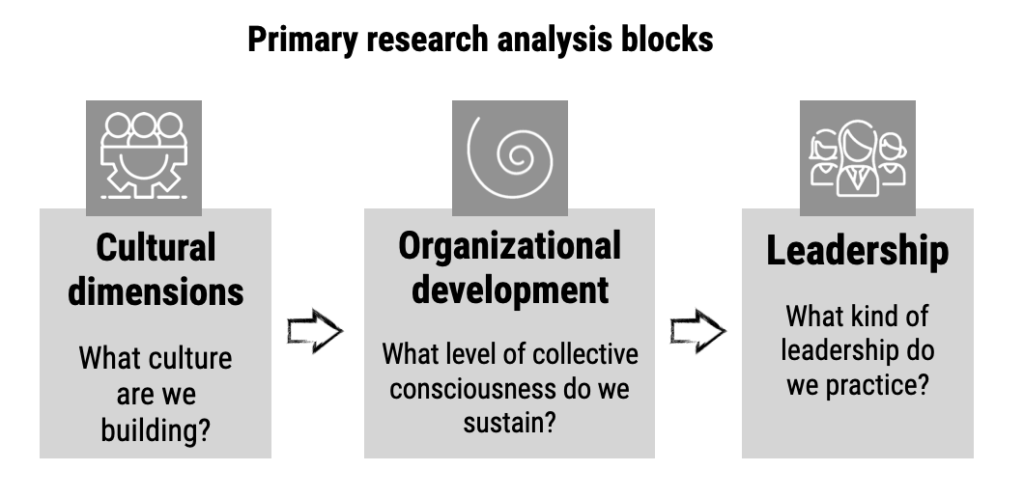
Our analysis was guided by three pillars: Culture dimensions, Organizational development, and Leadership.
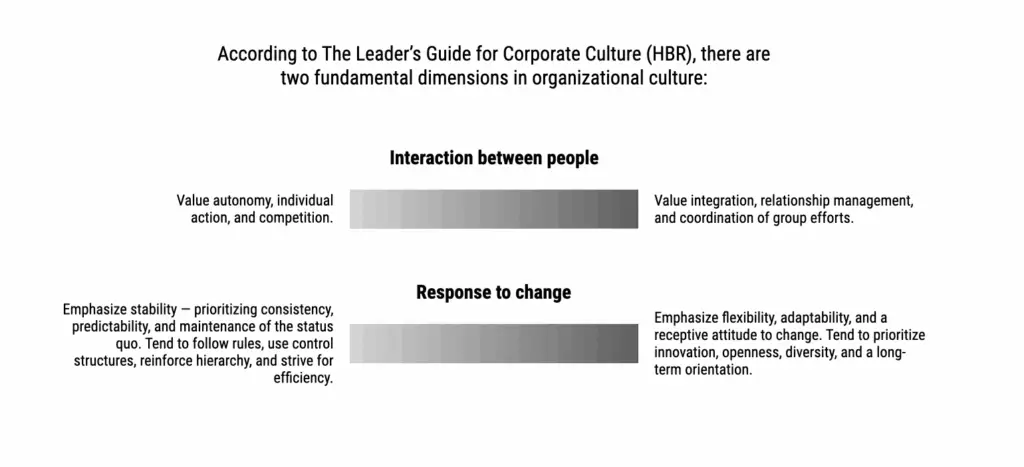
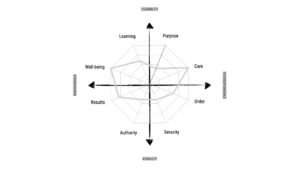
  • Culture dimensions (HBR): This model examines how people interact (autonomy vs. interdependence) and how they respond to change (stability vs. flexibility). The company showed strong tendencies toward collaboration and adaptability, while still carrying traces of competition and a need for clearer structures. This raised a key question for leadership: how to preserve a collaborative, innovative spirit without losing the systems that sustain long-term growth?
  • Organizational culture (Spencer Stuart): Mapping eight culture types across independence, interdependence, flexibility, and stability, this framework helped us highlight which cultural forces were strongest, which were less present, and how they interacted. The company balanced collaboration, performance, and purpose — but also faced strategic choices on which traits to reinforce for its future.
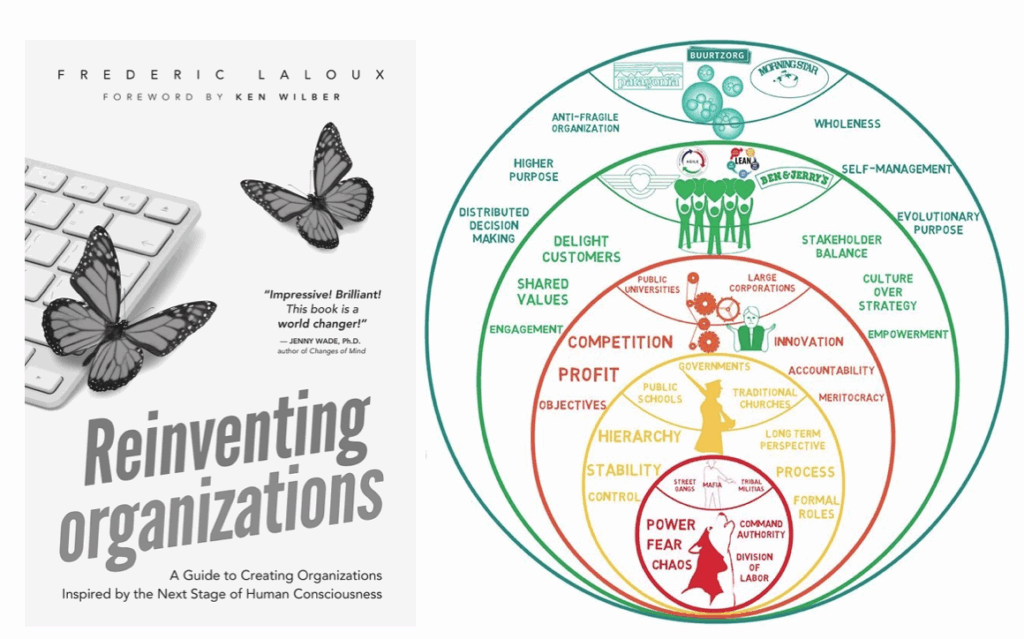
  • Organizational development (Laloux): Using the five stages of collective consciousness, we found the company operating between Orange (performance-driven, competitive) and Green (collaborative, pluralistic). This tension revealed both risks and opportunities: systems still rewarded individual merit, while employees were increasingly drawn to distributed leadership and shared purpose.
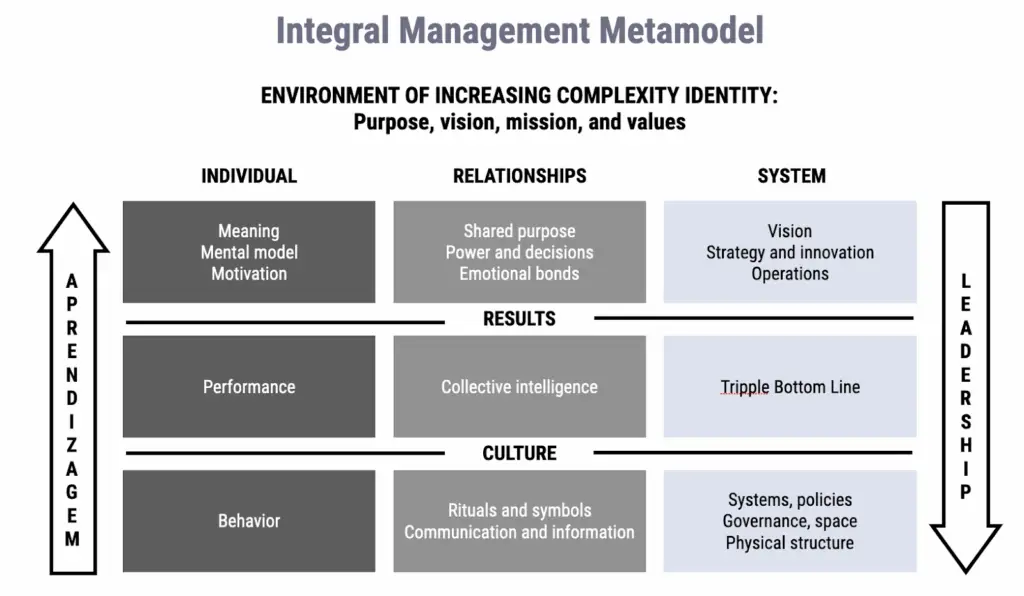
  • Leadership (Integral Metamodel + Paradigm Shift): We connected structural elements (individuals, relationships, systems) with the evolving paradigms of leadership (Brown, Wheatley, Kofman). Leaders spoke the language of collaboration, yet old patterns persisted: competition was rewarded over co-creation, and fear of mistakes limited psychological safety. The insight was clear — evolving leadership required not only new practices, but also a shift in mental models to create space for courage, complexity, and shared responsibility.

The delivery

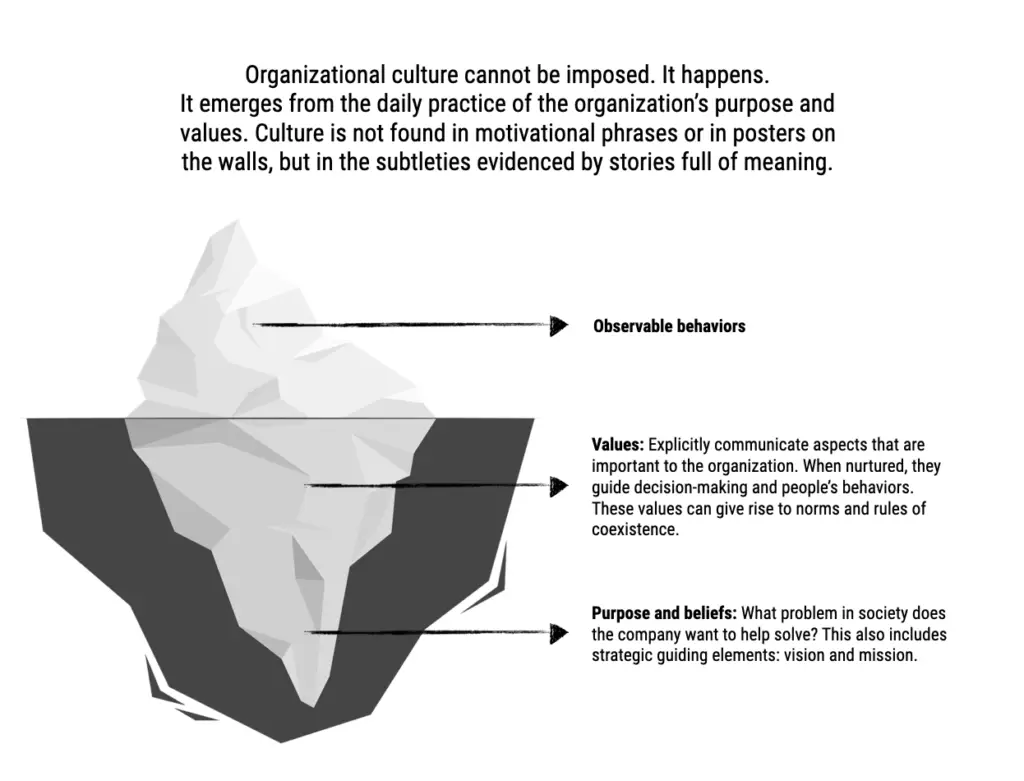
We brought these insights together through Schein’s three cultural layers:
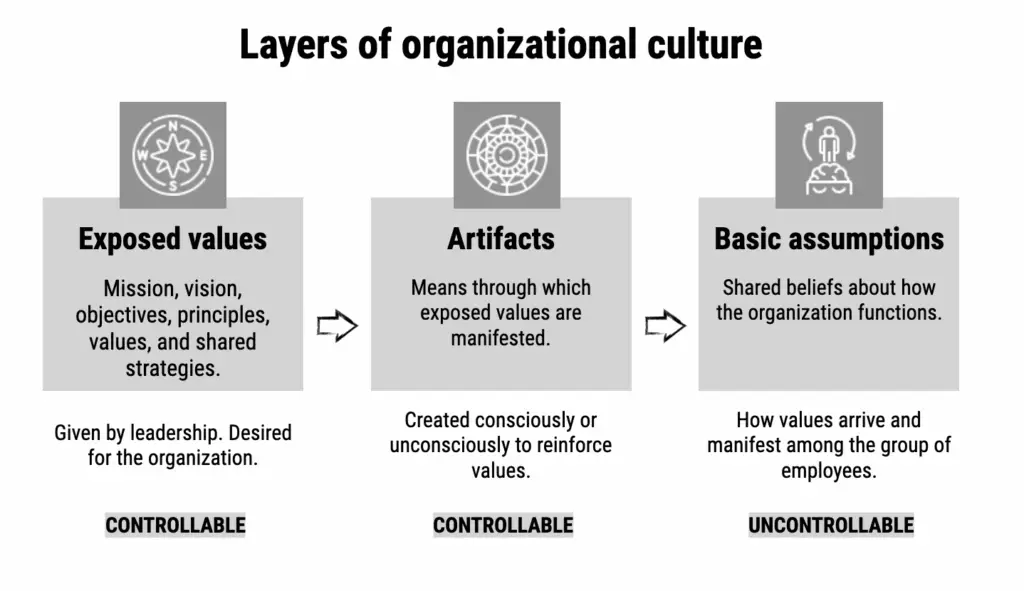
  • Exposed values — consciously defined by leadership, controllable.
  • Artifacts — rituals, symbols, and practices that reinforce values, also controllable.
  • Underlying assumptions — collective beliefs that shape behavior, not directly controllable.

This framework helped leadership see where deliberate action could shape culture and where change would depend on long-term reinforcement.

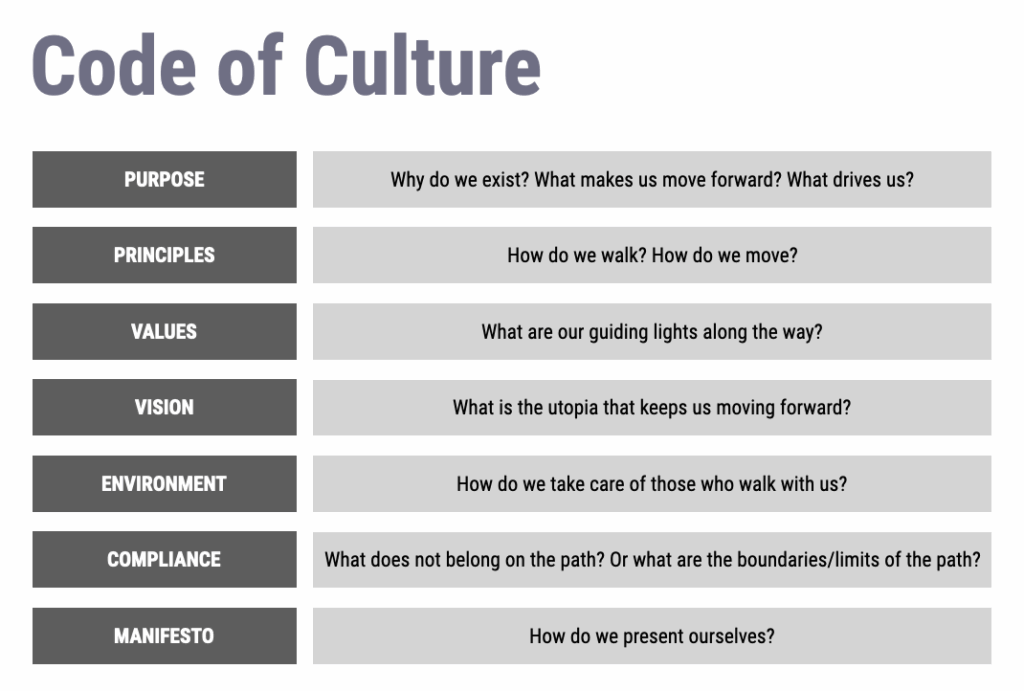
The result was not a static manual, but a living Code of Culture: evidence-based, co-created with leadership, and rooted in the real stories of employees. Alongside it, the organization received detailed analyses of leadership practices, cultural dynamics, and developmental challenges — a foundation for immediate action and long-term evolution.
The impact

Leaders gained clarity on how to sustain collaboration without losing focus on results. Teams saw themselves reflected in the culture. And the organization left with a cultural compass — not just words on the wall, but a framework to grow with integrity.

Because culture isn’t declared. It’s cultivated. And it takes analysis, methodology, and human connection to bring it to life.

Related Posts